
starter Updated 2026-02-28
Local Trust Blueprint
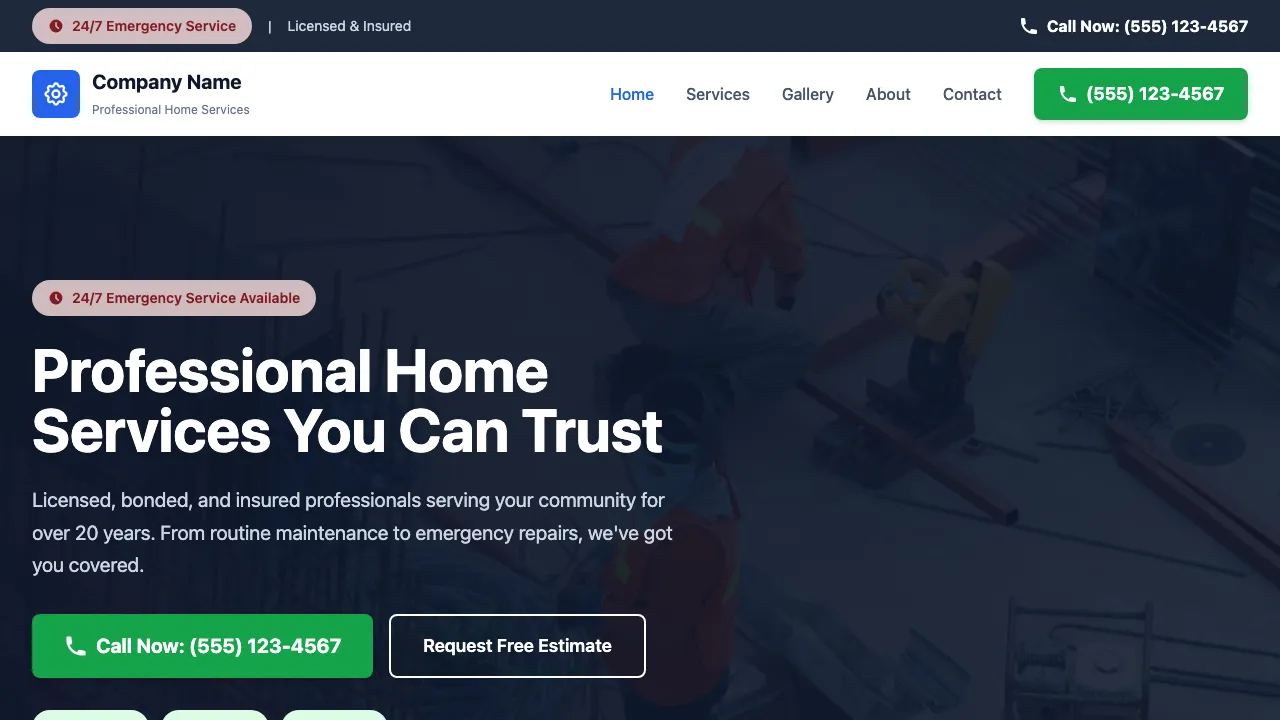
A lead-gen concept for home service businesses emphasizing credibility, service area clarity, and fast quote capture.
- Archetype
- The Everyman
- Industry
- Home Services
- Vibe
- Warm
Category
The complete guide to the Everyman brand archetype — traits, real-world brand examples, design principles, and how to apply it to your website.
The Everyman archetype — sometimes called the Regular Guy, the Regular Gal, or the Citizen — is one of the twelve Jungian brand archetypes. It represents the desire to belong, to connect with others, and to be accepted as part of a community. Where the Hero strives for greatness and the Ruler seeks control, the Everyman simply wants to fit in and be genuine.
Brands that align with the Everyman archetype position themselves as approachable, unpretentious, and inclusive. They avoid elitism and instead celebrate the ordinary, making customers feel comfortable and understood rather than aspired-to or intimidated.
The Everyman archetype resonates with the widest possible audience because it speaks to universal human needs: connection, belonging, and authenticity. It is the archetype of the neighbor you trust, the local shop you rely on, and the brand that feels like it was made for you.
Understanding the Everyman’s core personality traits is essential for building a consistent brand voice and visual identity. Here are the defining characteristics:
The Everyman archetype sits low on the formality spectrum and high on approachability. Its energy level is moderate — neither hyperactive nor sleepy — reflecting calm confidence and steady reliability.
Some of the world’s most successful brands embody the Everyman archetype. They win market share not by being exclusive but by being accessible and trustworthy.
IKEA democratised good design. With flat-pack furniture, transparent pricing, and a “design for everyone” ethos, IKEA is the textbook Everyman brand. Their stores are designed to feel welcoming, their product names are playful, and their marketing consistently focuses on real-life moments rather than aspirational luxury.
Target occupies the sweet spot between Walmart’s price-first positioning and department-store prestige. The messaging is upbeat and friendly, the store layout is clean and navigable, and designer collaborations bring high style at everyday prices. Target makes customers feel smart, not cheap.
Costco strips away pretension entirely. No-frills warehouses, minimal advertising, and rock-bottom prices signal honesty and value. The Kirkland Signature brand reinforces this: high quality, fair price, no flashy packaging.
Gap built its identity on timeless basics — jeans, t-shirts, and hoodies that fit every body type and budget. The brand’s advertising frequently features diverse groups of real people rather than supermodels, reinforcing its inclusive, everyday positioning.
Levi’s 501 jeans are the original everyman garment — worn by miners, musicians, and middle managers alike. The brand’s messaging centers on authenticity, heritage, and the idea that great style should be accessible to all.
The Everyman brand voice is conversational, warm, and jargon-free. It sounds like a helpful friend, not a corporate spokesperson. Here are the key principles:
Example headline: “Honest websites for real businesses.”
Avoid: “Leverage our cutting-edge platform to synergise your digital presence.”
Your website is often the first impression a customer has of your brand. If your brand aligns with the Everyman archetype, every design choice should reinforce approachability, clarity, and trust. Here’s how:
Everyman brands favour earthy, muted, and familiar colours. Think warm browns, friendly blues, and soft greens. Avoid neon brights (too energetic) or deep blacks (too exclusive). The palette should feel comfortable, like a well-worn pair of jeans.
Clean sans-serif typefaces in regular to medium weights work best. Avoid decorative display fonts (too showy) or ultra-thin weights (too fragile). The type should be effortlessly readable at every size. Good choices include Inter, Source Sans, and Nunito.
Use generous whitespace and clear visual hierarchy. Everyman sites should feel open and breathable, not cramped or overwhelming. Navigation should be intuitive and conventional — no hamburger menus on desktop, no hidden functionality.
Show real people in real settings. Avoid overly polished stock photography with perfect lighting and model-level subjects. Candid, natural photos of diverse people using your product or service build immediate trust.
Keep CTAs friendly and low-pressure. “Get started” and “See how it works” outperform “Buy now” or “Schedule a demo.” The goal is to reduce friction, not create urgency.
Lead with benefits, not features. Explain how your product improves daily life. Use testimonials from customers who sound like your audience. Add FAQ sections that address common concerns honestly.
Building a website for an Everyman brand? Pressless AI designs a site that captures your archetype with intention.
Create Your Everyman Website1 ready-to-use website concepts for the The Everyman archetype.
A lead-gen concept for home service businesses emphasizing credibility, service area clarity, and fast quote capture.
Pick any concept from this archetype and Pressless builds your site from scratch.
Start 7-Day Free Trial